

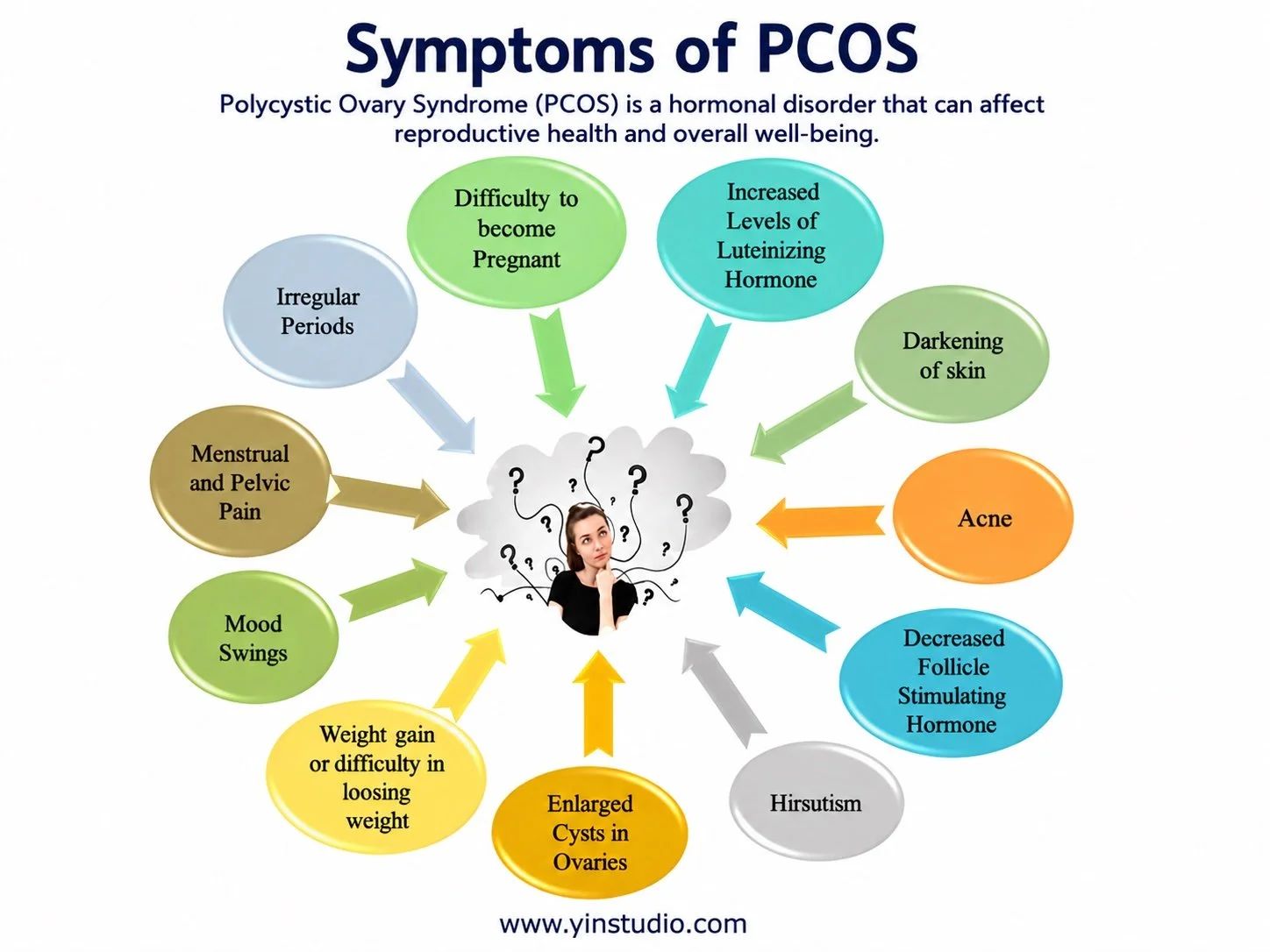
Polycystic ovarian syndrome (PCOS) is a common reproductive endocrine disorder and something we frequently treat in our practice. It often results in irregular or no menstruation and fertility difficulties due to the lack of regular ovulation.
This condition got its name because most of the women with PCOS (but not all) have ovaries that look enlarged and contain numerous small cysts on the outer edge of each ovary.
Five to ten percent of women of childbearing age have polycystic ovary syndrome, also known as PCOS. It can occur in girls as young as 11 years old. In approximately 75% of cases where young women have problems with menstruation due to late puberty,
PCOS is often diagnosed. Irregular, infrequent or absent periods, or periods with heavy flow and unbearable pain, are all variations of the problem.
Sometimes PCOS presents itself much later in life when a woman of childbearing age stops using contraceptive pills and finds herself having very long cycles or no cycles at all, and is unable to conceive.
Read More