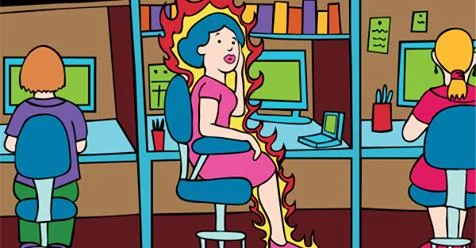
Why Is Menopause a No-Go Zone?
For 50% of the population, it’s an inevitable fact of life - and yet it’s still something we tend to speak about in hushed tones, even amongst the closest of friends. But it doesn’t have to be the big hairy deal we’ve all made it out to be . There are lots of strategies to help you through this transition.
Read More
What Keeps You Awake At Night?
You know the drill. You're lying in bed, exhausted and longing for sleep. But it seems your brain has other ideas.
Just as you're trying to wind down, it decides to play a compilation of some of your most embarrassing, regretful and cringe-worthy memories on shuffle.
Like that time you blanked on a colleague's name halfway through introducing them to someone.
When trying to rest, what does your brain decide you need to think about? And how do you shut those thoughts down?
Read More
Addressing Premenstrual Syndrome (PMS) with Acupuncture and Chinese Medicine
Because so many women experience PMS symptoms, most assume it is normal and don’t seek help. Diet and lifestyle choices can heavily influence hormone balance, and therefore PMS symptoms.
Acupuncture and Chinese Medicine balance internal regulatory systems such as the nervous system, the endocrine system, and the neuroendocrine system. Studies show that acupuncture effectively treats and manages PMS symptoms. In a study comparing pharmaceutical treatment with acupuncture, women who received acupuncture were 1.5 times more likely to have PMS symptoms improve compared to those on hormonal medications.
Think of these signs and symptoms as a signal. Pain and discomfort can be the body communicating that there is an imbalance within. Take this time to listen to the body without judgement and treat it with the respect and care it deserves.
Read More
Natural Treatment for Menopause
Menopause is the time when women’s menstrual period completely ceases, occurring when the ovaries cease producing the hormones oestrogen and progesterone. Initially symptoms of peri-menopause, such as irregular periods, heavy or light periods, and hot flushes will arise, before the onset of menopause.
On average, women experience menopause at 51 but can occur as early as 40 or as late as 55 years old. About 50% of women will experience uncomfortable symptoms, which could persist for between 2-8 years.
Read More